
Advanced conveyor transfer systems for Denmark’s Industrial Sector

Advanced conveyor transfer systems for Denmark's Industrial Sector

Engineering high-efficiency material handling solutions tailored for the rigorous demands of Northern European manufacturing and mining environments.

Advanced conveyor transfer systems for Denmark's Industrial Sector

Integrating precision engineering with robust durability to optimize the flow of bulk materials across Danish industrial landscapes, ensuring seamless integration and maximum uptime.

The Landscape of Material Handling in Denmark

Analyzing the intersection of Scandinavian efficiency and heavy-duty conveyor requirements.

Denmark's industrial sector is characterized by a strong emphasis on sustainability and automation. In the realm of material handling, the adoption of a sophisticated conveyor system is no longer just about transport, but about reducing the carbon footprint through energy-efficient motors and smart sensors that align with Denmark's green energy goals.

The local environment, marked by high humidity and coastal salinity, poses a significant challenge to equipment longevity. This has led to a surge in demand for high-grade conveyor components made from corrosion-resistant alloys and advanced polymers to prevent premature wear and unplanned downtime in critical logistics hubs.

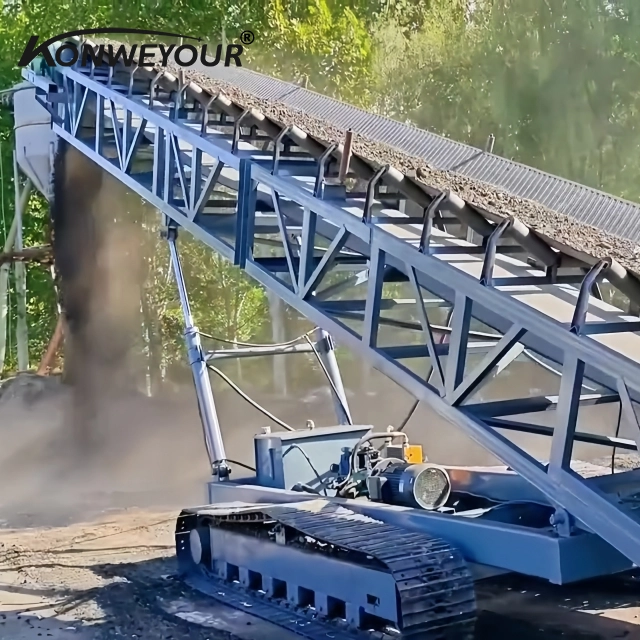
While Denmark is not a primary coal hub, its specialized industrial ports and legacy mineral processing sites still require the robust capabilities of a mine conveyor to handle abrasive aggregates and heavy ores, requiring a balance between extreme load capacity and precise control mechanisms.
Evolution of Conveyance Technology in Denmark

From mechanical simplicity to AI-driven autonomous material flow.

Market Development History

In the early 20th century, Danish material handling relied on basic belt loops and manual labor. By the 1970s, the industrialization of the agricultural and construction sectors introduced the first standardized coal mine conveyor adaptations for bulk soil and mineral transport, focusing primarily on raw power over precision.

The 1990s marked a pivot toward automation. The integration of PLC (Programmable Logic Controllers) allowed for the synchronization of multiple lines, transforming isolated belts into integrated systems. During this era, the focus shifted toward the modularity of conveyor components to allow for faster maintenance and customization.

From 2010 to the present, the trajectory has been defined by "Industry 4.0." The current state of the art involves IoT-enabled monitoring and predictive maintenance, where sensors detect belt slippage or bearing heat in real-time, drastically reducing the operational risks associated with heavy-duty industrial transport.

Future Development Trends

Carbon-Neutral Drive Systems

Integration of regenerative braking and solar-powered drive units to meet Denmark's 2030 climate targets.

AI-Driven Predictive Logistics

Using machine learning to predict load fluctuations and adjust conveyor speeds automatically to save energy.

Magnetic Levitation Transport

Research into frictionless transport for high-precision components to eliminate wear and tear entirely.

Industry Outlook and Strategic Forecast

Predicting the next leap in continuous conveying technology for the Nordic region.

Smart Sensor Integration
Transitioning to "self-healing" systems that identify component fatigue before failure occurs.
Sustainable Materials
Replacing traditional rubbers with biodegradable or recycled polymers for conveyor belts.
Modular Scalability
Rapidly deployable conveyor modules for seasonal peaks in Danish logistics centers.
Remote Operation
Full cloud-based control of conveyor networks from centralized Danish headquarters.

Industry Outlook

Based on search trends in Europe, there is a significant increase in queries related to "automated bulk handling" and "energy-efficient mining logistics." This indicates a market shift in Denmark toward the total integration of software and hardware, where the conveyor is viewed as a data-generating asset.

We expect that within the next 3-5 years, the standard for the Danish market will move toward fully autonomous systems that can adjust their own tension and speed based on the density of the material being transported, reducing energy waste by up to 20%.

Local Application Scenarios in Denmark

Proven deployments across diverse Danish industrial environments.

01. Port of Aarhus Bulk Handling

Implementation of heavy-duty transfer systems to move imported minerals from ships to warehouses with minimum dust emission.

02. Jutland Agriculture Processing

Custom grain and feed conveyors designed for high-volume throughput and strict food safety compliance.

03. Zealand Waste-to-Energy Plants

Specialized conveyors for transporting municipal waste into incineration chambers, requiring high heat resistance.

04. Specialized Aggregate Mining

Deploying ruggedized mine conveyor units for extraction of construction sands and gravels in coastal regions.

05. Pharmaceutical Logistics Hubs

Precision-engineered clean-room conveyor systems for the transport of medical supplies with zero contamination.

Brand Story

Global Development Journey of Hebei Juntong Machinery Manufacturing Co., Ltd.

Foundational Engineering

Started with a focus on heavy-duty belt manufacturing, solving the basic durability issues of early industrial conveyors.

Technological Pivot

Expanded into specialized conveyor components, introducing alloy-reinforced rollers for high-abrasion environments.

Global Market Entry

Successfully penetrated the European market by aligning products with CE standards and Nordic efficiency requirements.

Innovation Leadership

Developed intelligent transfer systems that reduce energy consumption, becoming a preferred partner for sustainable mining.

Sustainable Vision

Committed to creating zero-emission material handling solutions for a greener global industrial future.

Comprehensive Conveying Solutions for the Danish Market

A full portfolio of equipment designed for Northern European operational standards.

Common Questions for Denmark's Industrial Conveyors

Expert answers to technical and operational queries.

How do I select the right conveyor system for high-humidity Danish coastal areas?

We recommend specifying stainless steel or hot-dip galvanized conveyor components and using specialized moisture-resistant belt compounds to prevent oxidation and slippage.

Can your mine conveyor units be adapted for recycled aggregate transport?

Yes, our heavy-duty units are designed for high impact and abrasion, making them ideal for the recycled concrete and asphalt markets prevalent in Denmark.

What is the lead time for custom conveyor transfer systems in Europe?

Lead times vary by complexity, but our optimized supply chain for the Danish market typically ensures delivery within 8-12 weeks from final design approval.

Are coal mine conveyor specifications applicable to non-coal mineral extraction?

Absolutely. The high-torque drives and reinforced structures of a coal mine conveyor are perfectly suited for any dense, abrasive material like limestone or clay.

How do I reduce energy consumption in my existing conveyor system?

Upgrading to VFD (Variable Frequency Drives) and replacing old rollers with low-friction conveyor components can reduce energy usage by up to 15%.

Do your systems comply with Danish health and safety regulations?

All our equipment is manufactured according to ISO and CE standards, ensuring full compliance with European and Danish safety directives for industrial machinery.

Optimize Your Material Flow Today

Contact our technical engineering team for a custom consultation on high-performance conveying solutions in Denmark.

Contact Us Now

If you are interested in our products, you can choose to leave your information here, and we will be in touch with you shortly.

  • captcha