
HighPerformance conveyor transfer systems for Norway’s Mining Sector

  • Home
  • Global Service
  • HighPerformance conveyor transfer systems for Norway’s Mining Sector

High-Performance conveyor transfer systems for Norway's Mining Sector

Engineering durable, cold-resistant material handling solutions tailored for the rigorous demands of Norwegian industrial landscapes.

High-Performance conveyor transfer systems for Norway's Mining Sector

Integrating advanced engineering with robust components to ensure seamless material flow in Norway's most challenging mining environments, from deep pits to coastal terminals.

Industrial Landscape of Material Handling in Norway

Analyzing the intersection of geological challenges and technical requirements in the Nordic region.

Norway's mining industry is characterized by extreme topographical variations and a harsh sub-arctic climate. The demand for a reliable conveyor system is driven by the need to transport minerals across steep terrains while resisting freezing temperatures that can cause standard rubber belts to crack.

Currently, the region is shifting toward "Green Mining," where energy efficiency is paramount. This has led to a surge in the adoption of high-tension conveyor components that reduce rolling resistance and minimize the carbon footprint of heavy-duty material transport.

Furthermore, the focus on occupational safety in Norway means that automated monitoring and fail-safe mechanisms are no longer optional but mandatory for any mine conveyor installation to prevent accidents in remote, unmanned sections of the mine.
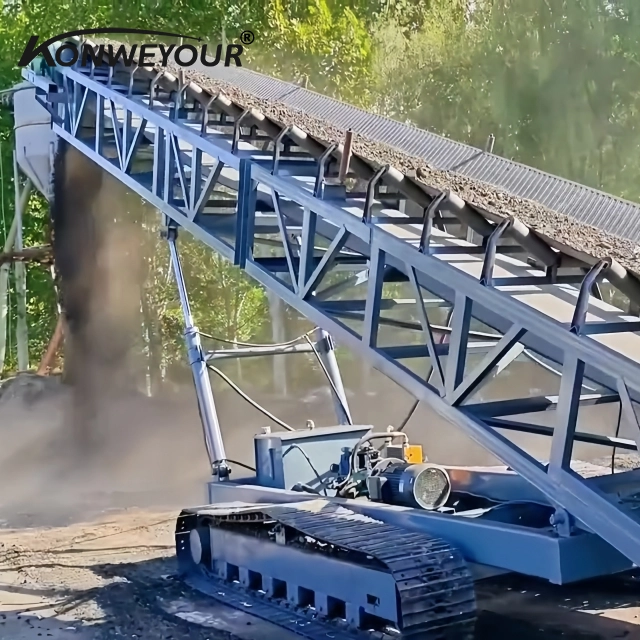
Evolution and Trajectory of Conveying Technology

From mechanical simplicity to intelligent, automated material flow.

Market Development History

In the early 20th century, Norwegian mines relied on basic gravity-fed systems and simple belt loops. However, by the 1970s, the introduction of reinforced steel-cord belts allowed for longer distances and higher capacities, transforming the efficiency of ore extraction.

The 1990s marked a pivotal shift toward specialized equipment, where the coal mine conveyor logic—focusing on explosion-proof components and dust suppression—was adapted for various hard-rock minerals common in the Scandinavian shield.

From 2010 to the present, the industry has moved into the era of digitalization. The integration of IoT sensors into conveyor components now allows for predictive maintenance, reducing unplanned downtime in critical Arctic operations.

Future Development Trends

Hydrogen-Powered Drive Systems

To meet Norway's 2030 climate goals, we expect a transition from electric grids to hydrogen-powered drives for remote conveyor installations.

AI-Driven Load Balancing

Future systems will utilize real-time AI to adjust belt speed based on ore density, optimizing energy consumption and reducing wear.

Self-Healing Belt Materials

Research is pivoting toward polymers that can seal micro-tears automatically, essential for the abrasive materials handled in Norwegian quarries.

Strategic Outlook for Continuous Conveying

Predicting the next 5 years of innovation based on Nordic industrial trends.

Extreme Climate Adaptation
Development of ultra-low temperature alloys and rubbers that maintain flexibility at -40°C.
Autonomous Maintenance
Deployment of robotic crawlers for real-time belt inspection and automated splicing.
Modular System Design
Rapid-deploy modular sections for temporary mining sites in the Norwegian highlands.
Low-Friction Materials
Implementing bio-based lubricants and polymers to eliminate pollution in fjords.

Industry Outlook

Based on Google search trends for "sustainable mining" and "automated ore transport" in Scandinavia, we anticipate a 25% increase in demand for integrated mine conveyor systems that feature zero-emission power sources.

The industry will move toward a "Service-as-a-Product" model, where equipment providers don't just sell hardware but guarantee "uptime" through deep digital integration and real-time component telemetry.

Localized Application Scenarios in Norway

Real-world deployments tailored to Norway's geography and industry standards.

01. High-Angle Ore Transport in Fjords

Implementing steep-angle conveyor systems to transport minerals directly from mountain quarries down to shipping vessels in the fjords, minimizing road transport.

02. Arctic Iron Ore Extraction

Heavy-duty mine conveyor installations in the far north, utilizing specialized cold-weather lubricants and heated drive stations.

03. Tunneling and Infrastructure Projects

Deploying flexible, high-capacity conveyor systems for Norway's extensive tunnel construction, ensuring rapid muck removal from deep excavation sites.

04. Phosphate and Industrial Mineral Handling

Customized systems designed to handle abrasive phosphate minerals, focusing on reinforced liners and high-wear resistance conveyor components.

05. Port Terminal Bulk Loading

Advanced conveyor transfer systems at coastal ports to streamline the loading of bulk minerals onto international cargo ships.

Brand Story

Global Development History of Hebei Juntong Machinery Manufacturing Co., Ltd.

Foundational Engineering

Started with a focus on heavy-duty belt manufacturing, establishing a reputation for durability in the most abrasive mining conditions.

Technical Diversification

Expanded into the design of complex transfer systems, solving the critical pain point of material blockage and spillage at transfer points.

Global Market Expansion

Entered the European market, adapting engineering standards to meet strict EU safety and environmental regulations for conveyor systems.

Innovation in Automation

Integrated smart sensors and PLC controls into our product lines, reducing operational costs for global mining clients.

Commitment to Sustainability

Developing the next generation of energy-efficient conveyors to support the global transition toward carbon-neutral mining.

Comprehensive Conveying Portfolio for Norway

A full spectrum of equipment designed for Scandinavian mineral extraction and transport.

Common Questions for Norway Mining Logistics

Expert answers to technical challenges faced by Norwegian operators.

How do you ensure a conveyor system operates in sub-zero temperatures?

We utilize specialized cold-resistant rubber compounds and low-temperature synthetic lubricants that prevent belt embrittlement and drive freezing in Arctic conditions.

What is the best mine conveyor for steep terrain in the Norwegian highlands?

We recommend high-grip cleated belts or sandwich-style conveyors that prevent material rollback on steep inclines.

Can your coal mine conveyor technology be used for other minerals?

Yes, the explosion-proof and dust-containment features developed for coal are perfectly adaptable to other volatile or fine-particle mineral extraction processes.

How do you reduce wear on conveyor components when handling abrasive ores?

We integrate ceramic liners and ultra-high molecular weight (UHMW) polyethylene slides at critical transfer points to extend component lifespan.

What makes your conveyor transfer systems more efficient for port loading?

Our systems use optimized chute geometry and automated speed control to minimize material degradation and dust emissions during bulk loading.

Do you provide remote monitoring for conveyor systems in isolated areas?

Yes, we provide full IoT integration that allows operators in Oslo or Tromsø to monitor belt tension, motor heat, and throughput in real-time.

Ready to Optimize Your Mining Logistics?

Contact our engineering team to design a custom material handling solution specifically for the industrial requirements of Norway.

Contact Us Now

If you are interested in our products, you can choose to leave your information here, and we will be in touch with you shortly.

  • captcha