The Transformative Role of Modern Conveyor Systems in Industrial Efficiency
In the relentless pursuit of operational excellence, modern manufacturing and logistics industries invariably confront the critical challenge of optimizing material flow. At the heart of this optimization lies the sophisticated technology of conveyor systems. Far from being mere conduits for movement, today’s conveyor solutions are intricate, intelligent networks designed to orchestrate the seamless transition of goods, components, and raw materials across complex production lines, warehousing facilities, and distribution centers. Their evolution from rudimentary belts to highly automated, sensor-driven systems marks a pivotal shift in industrial capability, enabling unprecedented levels of productivity, precision, and safety. A well-designed conveyor system acts as the backbone of a facility, directly influencing throughput, reducing manual labor costs, minimizing human error, and enhancing worker safety by automating repetitive and ergonomically challenging tasks. The strategic deployment of these systems allows companies to unlock bottlenecks, accelerate processing times, and significantly lower the per-unit cost of handling, making them an indispensable asset in competitive global markets. This foundational role underscores why understanding the nuances and advantages of contemporary conveyor technology is paramount for any enterprise aiming to future-proof its operations and achieve sustained growth.
Unpacking the Core Technical Advantages of Advanced Material Handling Technologies
The technical sophistication embedded within modern material handling systems extends far beyond simple transportation, offering a suite of advantages that redefine operational paradigms. Advanced control systems, often leveraging Programmable Logic Controllers (PLCs) and Variable Frequency Drives (VFDs), allow for granular control over speed, direction, and synchronization, enabling dynamic adjustment to production demands. These systems are engineered for remarkable durability, frequently incorporating robust materials like heavy-gauge steel, specialized polymers, and reinforced composites that withstand abrasive materials, extreme temperatures, and continuous heavy loads. Precision is another hallmark, with many systems capable of positioning items with millimeter accuracy, critical for automated assembly, sorting, and packaging processes. Energy efficiency has become a key design consideration, with features such as low-friction components, energy-regenerative drives, and intelligent sleep modes significantly reducing operational electricity consumption, thereby lowering operating expenses and carbon footprint. Furthermore, advanced diagnostic capabilities, often integrated with condition monitoring sensors, allow for predictive maintenance, identifying potential issues before they escalate into costly downtime. This proactive approach ensures maximum uptime and extends the operational lifespan of the equipment. The modularity inherent in many contemporary designs also offers unparalleled flexibility, enabling rapid reconfiguration and expansion to adapt to changing production layouts or increased capacity requirements, ensuring the system remains a versatile and long-term investment.
Quantifying Impact: Data-Driven Performance Metrics of Integrated Solutions
The true value of advanced material handling solutions is most clearly demonstrated through measurable, data-driven performance metrics that quantify their impact on operational efficiency and profitability. Implementing a modern system typically results in a demonstrable reduction in cycle times, often by as much as 30-50%, accelerating the movement of products from raw material to finished goods. Throughput rates frequently see gains of 25-75%, directly increasing production capacity without expanding physical footprint. For example, a leading e-commerce fulfillment center reported a 45% increase in order processing capacity within the first year of deploying an automated sorting system, directly attributable to reduced manual handling and optimized flow. Error rates, particularly in sorting and picking, can plummet by over 80% when transitioning from manual processes to precision automation, drastically cutting down on returns, reworks, and associated logistics costs. This accuracy translates into significant savings; one automotive component manufacturer documented a 15% decrease in scrap material and rework expenses annually after upgrading to a vision-guided system. Energy consumption, while a factor, is often offset by the gains in efficiency and can be further optimized. Studies show that energy-efficient systems can reduce power usage by up to 20-30% compared to older, less optimized equipment, contributing to both environmental sustainability and lower utility bills. The Return on Investment (ROI) for such systems is often realized within 18-36 months, driven by reduced labor costs, increased capacity, and minimized operational errors. For instance, a pharmaceutical company calculated a full ROI in just 28 months, primarily due to a 60% reduction in manual labor for packaging and a 20% increase in line speed. These compelling statistics underscore how intelligent automation transforms operational challenges into strategic advantages, providing a clear pathway to enhanced productivity and financial performance.
Navigating the Landscape: A Comparison of Leading Material Handling System Manufacturers
The global market for material handling systems is diverse, populated by a range of manufacturers each with distinct specializations, technological strengths, and service models. Understanding these differences is crucial for selecting a partner whose offerings align perfectly with specific operational needs and strategic objectives. Large, established corporations often provide comprehensive, end-to-end solutions, integrating various system types and offering extensive global support. Mid-sized specialists, on the other hand, might excel in niche areas, such as hygienic designs for food processing or heavy-duty systems for mining, often providing more agile and customized engineering. Emerging players frequently differentiate themselves through cutting-edge automation, AI-driven solutions, and robust software integration capabilities. The choice between these different types of manufacturers depends heavily on factors such as project complexity, required level of customization, budget constraints, and long-term service expectations. Evaluating manufacturers based on their technical prowess, proven track record, customer support infrastructure, and innovation pipeline is essential. Below is a comparative overview highlighting key differentiators:
Feature/Attribute | Large Global Conglomerate | Mid-Sized Niche Specialist | Innovative Tech Start-up |
System Scope | Full range: small components to heavy industrial, complex integrated systems. | Focus on specific industries (e.g., food & beverage, automotive, heavy-duty). | Specializes in advanced automation, robotics, AI, data analytics integration. |
Customization Level | Modular designs, configurable options, some bespoke engineering for large projects. | High degree of specialization and custom engineering for unique industry demands. | Tailored software and hardware integration, often co-developing with clients. |
Technological Edge | Robust, proven technologies, reliable, industry-standard automation. | Deep expertise in specific material types, environmental conditions (e.g., cleanroom, harsh). | Pioneering IoT, machine learning for predictive maintenance, advanced robotics. |
After-Sales Support | Extensive global service network, spare parts availability, comprehensive training. | Personalized support, quicker response times, specialized technical assistance. | Remote diagnostics, software updates, community-driven support, evolving service models. |
Cost-Effectiveness | Higher initial investment, but long-term reliability and lower TCO for large operations. | Potentially higher unit cost for highly specialized components, but optimal performance in niche. | Varies; can offer significant operational savings through innovation, but may have higher upfront R&D costs. |
Tailored Productivity: Crafting Custom Solutions for Unique Operational Needs
Off-the-shelf material handling systems, while effective for many general applications, often fall short when confronted with the intricate and specific demands of modern industrial operations. This is where the power of customization truly shines, transforming generic equipment into highly specialized tools perfectly aligned with unique production workflows, product characteristics, and facility constraints. Customization extends beyond mere dimensions; it encompasses the selection of specific materials for belts and frames to withstand corrosive chemicals, extreme temperatures, or stringent hygienic requirements found in food processing and pharmaceutical industries. For example, systems can be engineered with stainless steel components and washdown capabilities for sterile environments, or with abrasion-resistant surfaces for handling heavy aggregates. Specialized attachments, such as diverters, accumulation zones, merges, and unique gripping mechanisms, can be integrated to handle oddly shaped products, fragile items, or objects requiring specific orientations. Furthermore, the intelligent integration with existing machinery, robotics, and enterprise resource planning (ERP) systems is paramount. A bespoke solution ensures seamless data flow and process synchronization, eliminating manual data entry, reducing human error, and creating a cohesive, intelligent manufacturing ecosystem. Environmental factors also play a significant role; systems can be designed for dusty, damp, or explosive atmospheres, incorporating features like sealed motors, explosion-proof components, or specialized ventilation. This level of meticulous engineering ensures that every aspect of the material flow is optimized, leading to maximized efficiency, enhanced safety, minimized waste, and a superior return on investment that standard solutions simply cannot deliver.
Real-World Applications: Success Stories Across Diverse Industrial Sectors
The versatility and adaptability of advanced material handling systems are best illustrated through their successful deployment across a myriad of industrial sectors, each presenting unique challenges overcome by tailored solutions. In the Automotive Industry, a major car manufacturer implemented a sophisticated overhead power-and-free system to transport car bodies through various paint shops and assembly stations. This customized solution allowed for precise buffering, synchronized line speeds, and flexible routing, reducing work-in-progress inventory by 20% and slashing production cycle times for painting by 15%, significantly improving overall assembly efficiency. In the Food & Beverage Sector, a large bakery sought to automate its proofing and baking processes while maintaining stringent hygiene standards. They adopted a modular plastic belt system with easy-to-clean surfaces and tool-less disassembly features, integrated with a controlled atmosphere proofing chamber. This not only minimized product contamination risks but also increased production capacity by 30% due to continuous, automated flow, while simultaneously reducing manual handling labor by 40%. For E-commerce and Logistics, a national distribution center deployed an intelligent sortation system featuring high-speed optical scanners and pneumatic diverters. This system could process over 10,000 parcels per hour, accurately sorting them to specific outgoing routes. The result was a 60% reduction in package misroutes and a dramatic decrease in the time required to sort incoming freight, enabling next-day delivery promises to be consistently met. In the Pharmaceutical Industry, a company handling vials and delicate medical devices required an ultra-clean, vibration-free transport system. They invested in a precise, low-friction roller system with HEPA filtration enclosures, ensuring product integrity and compliance with FDA regulations. This bespoke setup reduced product damage by 90% and allowed for automated sterile packaging, streamlining a previously manual and error-prone process. These diverse case studies underscore that irrespective of the industry, meticulously designed material handling solutions are instrumental in driving operational excellence, enhancing safety, and delivering tangible economic benefits.
Future-Proofing Operations with Smart Conveyor System Integration

As industries continue to evolve at an unprecedented pace, the strategic integration of smart technologies into conveyor systems is no longer a luxury but a necessity for future-proofing operations. The convergence of the Internet of Things (IoT), Artificial Intelligence (AI), and advanced robotics is transforming traditional material handling into intelligent, adaptive ecosystems. IoT-enabled sensors embedded within conveyor components can continuously monitor critical parameters such as motor temperature, belt tension, bearing vibration, and energy consumption. This real-time data feeds into AI-powered analytics platforms, enabling predictive maintenance algorithms to anticipate potential failures before they occur, drastically reducing unplanned downtime and optimizing maintenance schedules. For instance, an unexpected rise in motor temperature could trigger an alert for early inspection, preventing a catastrophic breakdown and associated production losses. Robotic arms integrated with conveyor lines can perform complex pick-and-place operations, quality inspections, and intricate assembly tasks with unparalleled speed and accuracy, augmenting human capabilities and improving ergonomic conditions. Furthermore, AI-driven route optimization can dynamically adjust material flow based on real-time inventory levels, production bottlenecks, and urgent order priorities, creating a truly responsive and agile supply chain. The adoption of digital twins—virtual replicas of physical conveyor systems—allows engineers to simulate modifications, troubleshoot issues, and optimize performance in a risk-free environment before implementing changes in the real world. This holistic, data-centric approach to conveyor system management not only enhances efficiency and reduces operational costs but also provides invaluable insights for continuous improvement and innovation. Investing in smart conveyor integration today means building a resilient, adaptable, and highly competitive operational framework capable of navigating the complexities of tomorrow's industrial landscape. The modern conveyor is truly a smart conduit, guiding not just materials, but also the future of manufacturing and logistics.
Frequently Asked Questions About Conveyor Systems
· What are the primary types of conveyor systems available?
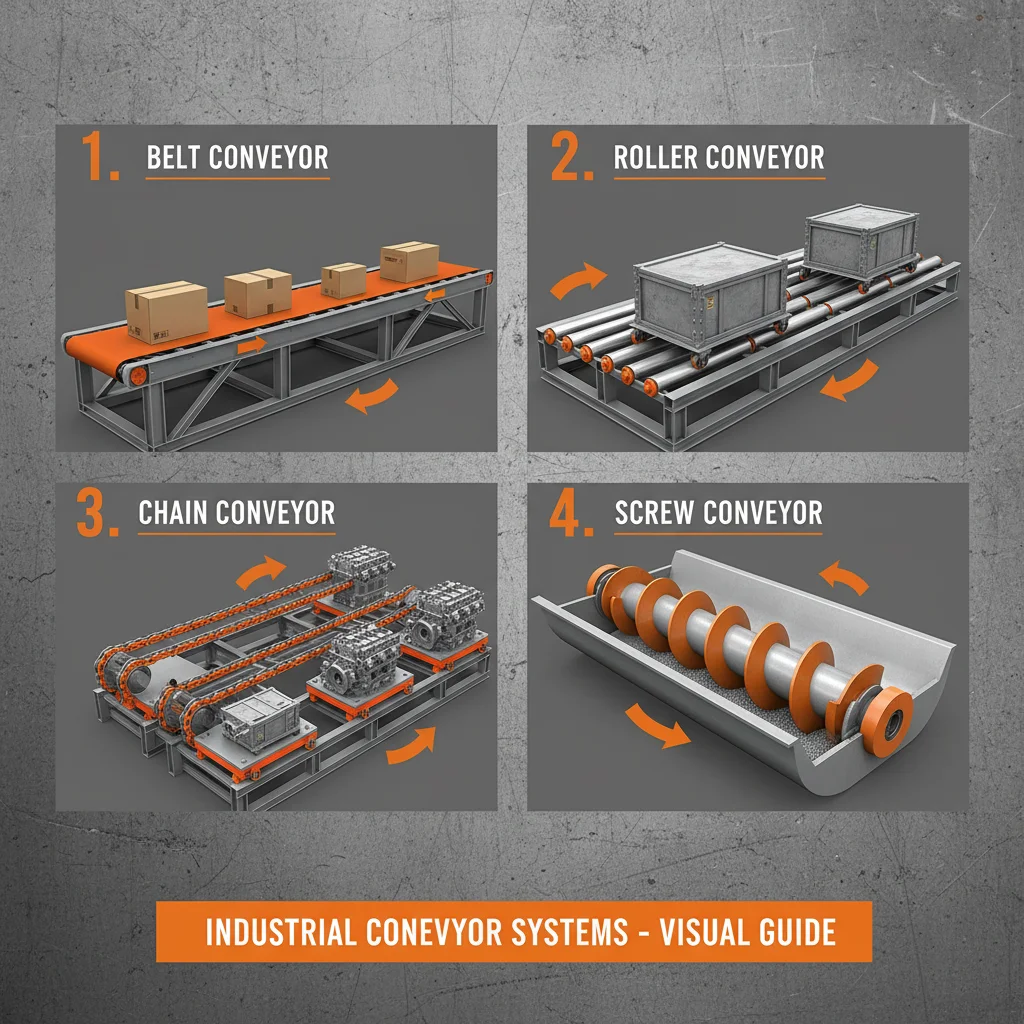
The primary types include belt conveyors (for general bulk or packaged goods), roller conveyors (powered or gravity-fed, ideal for flat-bottomed items), chain conveyors (for heavy or irregular items), slat conveyors (for heavy-duty applications or assembly lines), and screw conveyors (for bulk granular or powdered materials). Each type is designed for specific material characteristics and operational requirements.
· How do conveyor systems contribute to operational efficiency and cost reduction?
Conveyor systems significantly enhance efficiency by automating material transport, reducing manual labor, speeding up throughput, and minimizing human error. They reduce costs by optimizing workflows, decreasing labor expenses, lowering the risk of product damage, and improving worker safety, which in turn reduces workplace injury claims and associated downtime.
· What factors should be considered when selecting a conveyor system for a specific application?
Key factors include the type, size, weight, and fragility of the material being transported, the required throughput rate, the available floor space and layout, environmental conditions (temperature, humidity, hygiene requirements), the need for accumulation or sorting, and the budget for initial investment and ongoing maintenance.
· Can conveyor systems be integrated with existing automation and control systems?
Yes, modern conveyor systems are designed for seamless integration with a wide range of existing automation technologies, including PLCs, SCADA systems, robotics, vision systems, and enterprise resource planning (ERP) software. This ensures synchronized operations, real-time data exchange, and holistic process control.
· What are the typical maintenance requirements for conveyor systems?
Maintenance typically involves regular inspection of belts, chains, rollers, and motors for wear and tear; lubrication of moving parts; tension adjustments; cleaning to prevent build-up; and periodic checks of electrical components and sensors. Predictive maintenance strategies, using IoT data, are increasingly common to minimize unplanned downtime.
· How can conveyor systems be customized to meet unique industry-specific needs?
Customization can involve specialized materials (e.g., food-grade, stainless steel, abrasive-resistant), unique configurations (curves, inclines, merges, diverters), integrated attachments (grippers, lifters, pushers), specific control logic for process synchronization, and adaptation to cleanroom or hazardous environments.
· What role do smart technologies like IoT and AI play in the future of conveyor systems?
IoT sensors provide real-time operational data for performance monitoring and predictive maintenance. AI algorithms analyze this data to optimize routes, anticipate failures, and enhance system efficiency. These technologies enable adaptive control, proactive problem-solving, and integration into broader smart factory ecosystems, driving greater automation and operational intelligence.